
Best Energy Efficient Tumble Dryers UK
Looking for an energy efficient tumble dryer that can reduce running costs over time? This guide explains which dryer types usually use less electricity, when a heat pump dryer is worth paying more for, and which routes make most sense for regular UK household use.
For most buyers, the most energy efficient tumble dryer route is usually a heat pump model. The key question is whether your usage is regular enough for lower running costs to matter more than the higher upfront price.
Energy efficiency only matters if it fits your real usage
A heat pump tumble dryer is usually the most efficient route, but it is not always the best-value choice for every home. If you use your dryer regularly, start here. If you are still unsure whether heat pump or condenser is right for you, read heat pump vs condenser. If you want numbers first, use the running cost calculator.
What is the most energy efficient tumble dryer?
For most UK buyers, a heat pump tumble dryer is usually the most energy efficient choice. It typically makes the strongest long-term case when the dryer will be used regularly, especially in family homes or households drying several loads per week.
Most efficient type
Heat pump tumble dryers.
Best for savings
Regular-use homes and longer-term ownership.
Main trade-off
Higher upfront price than many condenser dryers.
Best next check
Estimate yearly running cost before buying.
Energy and running cost calculator
Use this simple calculator to estimate electricity use, cost per load, weekly cost, monthly cost and yearly cost based on dryer type and usage.
These are simple planning estimates. Check the appliance label and manufacturer information for the exact model before buying.
Your estimate
Per load
Typical cost for one drying cycle
£0.46
Per hour
Approximate hourly cost
£0.16
Per week
Based on your weekly use
£1.83
Per month
Estimated monthly cost
£7.91
Per year
Estimated yearly cost
£95
Usage summary
What this means in simple terms
Low use
How to use this properly
Compare a heat pump estimate against condenser and vented presets. If the yearly difference is large and you dry clothes often, efficiency becomes much more important.
Most economical tumble dryer UK: what actually saves money?
The most economical tumble dryer is usually the one that balances lower electricity use with a purchase price that makes sense for your usage. A heat pump dryer often uses less electricity per cycle, but it only becomes the best-value route if you use the dryer often enough for those savings to matter.
- Regular weekly use: start with heat pump and compare estimated yearly cost.
- Light occasional use: a cheaper condenser can still be sensible if the lower upfront price matters more.
- Budget plus savings: compare budget heat pump models against cheap condenser models, not just premium machines.
- Best energy savings: check kWh per cycle, capacity and whether you normally dry full or partial loads.
Use the running cost calculator to compare kWh per load, then return to this guide if lower electricity use is still the main buying priority.
Heat pump vs condenser vs vented efficiency
The biggest energy-efficiency decision is the type of tumble dryer you choose. Brand and model matter, but the dryer type usually sets the direction first.
| Dryer type | Energy efficiency | Running cost logic | Upfront cost | Best for |
|---|---|---|---|---|
| Heat pump | Best | Usually lowest over time | Usually higher | Regular use, family homes and long-term savings |
| Condenser | Middle | Usually higher than heat pump | Usually lower than heat pump | Budget-conscious buyers needing flexible placement |
| Vented | Lowest | Usually weaker over time | Usually cheapest to buy | Lower upfront spend, lighter use and suitable venting setups |
What makes a tumble dryer energy efficient?
An energy efficient tumble dryer uses less electricity to dry a typical load. In real buying terms, that matters because each drying cycle has a cost, and that cost adds up over months and years.
The main point is not just choosing the dryer with the best-looking label. The better question is whether the efficiency saving will matter in your home. A regular-use household can benefit much more than a home that only uses the dryer occasionally.
That is why the best energy efficient tumble dryer is not always the best-value choice for every buyer. The right decision depends on usage frequency, purchase price, electricity cost, capacity and how long you expect to keep the machine.
When this page is most useful
This page is useful if you care about lower electricity use, running-cost logic and whether paying more for stronger efficiency actually makes sense.
This page is useful if…
- You want lower electricity use over time
- You are comparing heat pump and condenser routes
- You use the dryer several times a week
- You want a shortlist based on value, not just purchase price
Efficiency matters most if…
- You have a family or busy household
- You dry towels, bedding or larger loads often
- You plan to keep the dryer for years
- You want better ownership cost over time
Best energy efficient tumble dryer routes
These are practical starting points if energy efficiency is one of your top buying priorities.
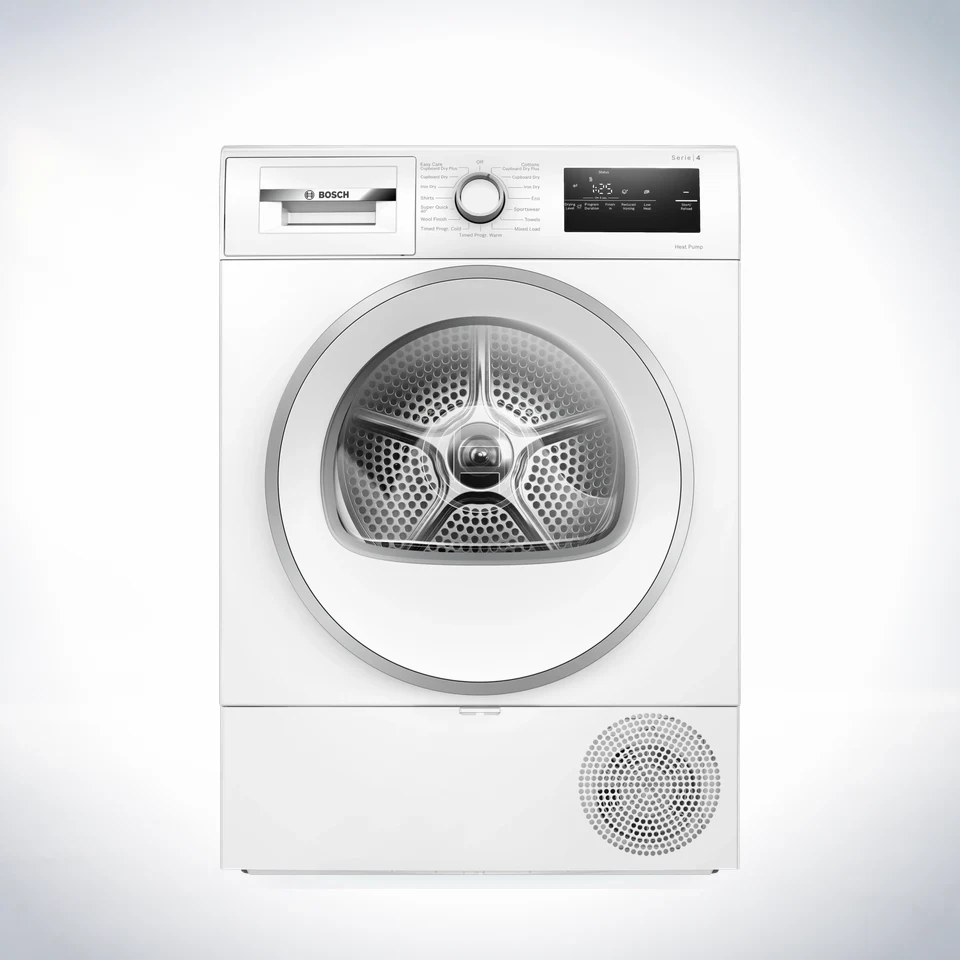
Bosch WTH85226GB
A strong heat pump route for buyers who want better long-term efficiency and are willing to pay more upfront for stronger ownership logic.
- Strong long-term efficiency route
- Good fit for regular-use homes
- Better for buyers thinking beyond checkout price
Best for: Regular-use households, premium-minded buyers and running-cost conscious homes.
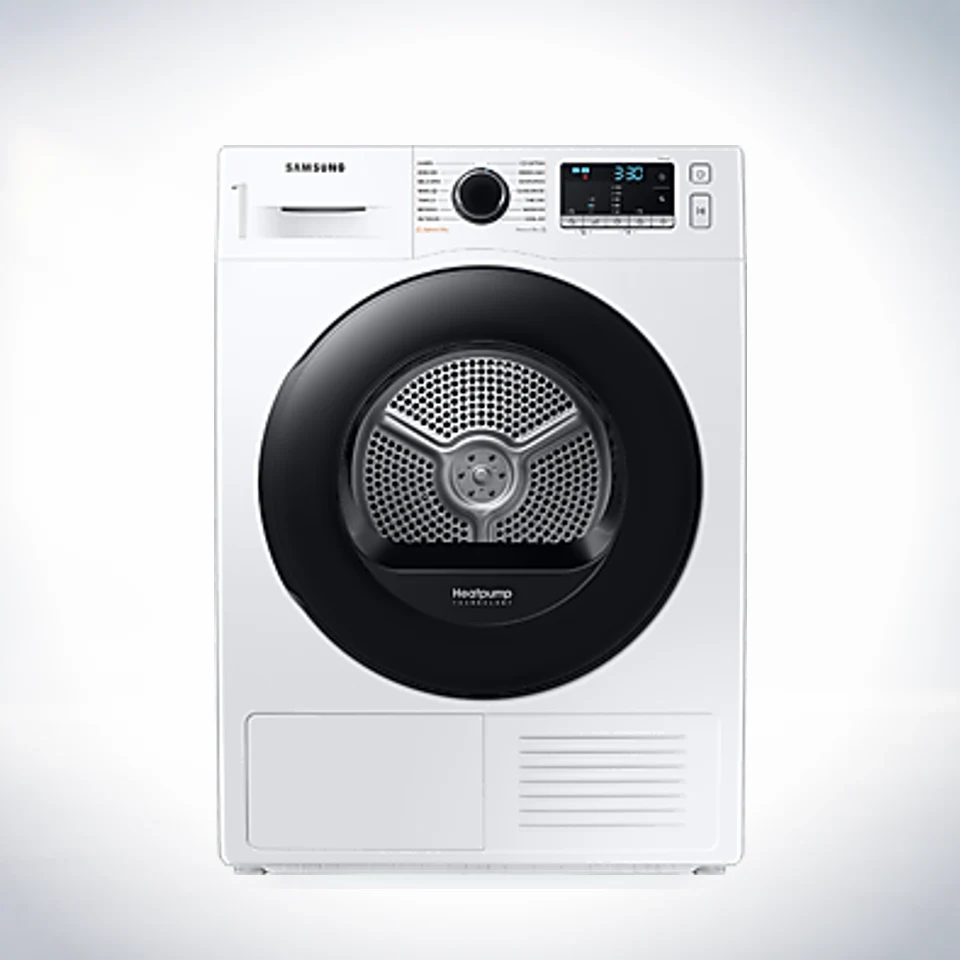
Samsung Series 5
A practical all-round heat pump route for buyers who want a good balance between energy efficiency, everyday usability and value.
- Good efficiency-to-value balance
- Sensible all-round shortlist choice
- Useful for everyday households
Best for: Medium to regular use, balanced buyers and homes comparing price against efficiency.
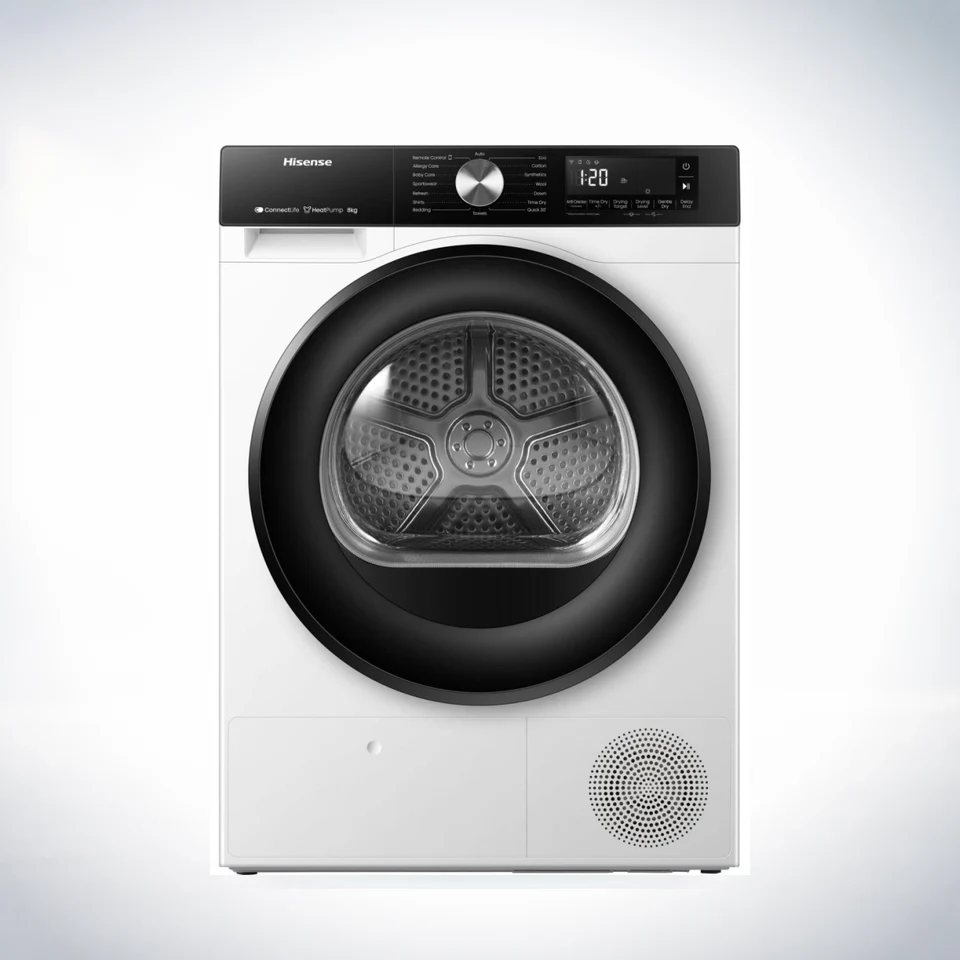
Hisense DH3S802BW3
A more accessible route into heat pump ownership for buyers who want lower running-cost logic without going straight into premium pricing.
- Accessible heat pump route
- Useful for tighter budgets
- Better efficiency logic than many cheap condenser options
Best for: Budget-aware buyers, value heat pump shopping and homes wanting stronger efficiency without premium spend.
Why efficiency matters for the buyer
Energy efficiency matters most when it changes the ownership cost, not just when it looks good on a product page.
Lower electricity use
A more efficient dryer usually uses less power per load, which matters more when the machine is part of your normal weekly routine.
Better for regular use
The more often the dryer runs, the easier it is to justify paying more upfront for stronger efficiency.
Long-term value
Efficiency matters most when you compare total ownership logic instead of only the purchase price.
Not always right for everyone
A highly efficient dryer is not automatically the smartest answer if usage will be very light or the budget is very tight.
When it is worth paying more for better efficiency
Better efficiency is usually easiest to justify when the dryer becomes a regular part of the home routine.
Usually worth it
If you use the dryer several times a week, stronger efficiency usually makes more sense.
Usually worth it
If you plan to keep the machine for years, lower running cost can become more important.
Maybe not worth it
If your usage will be light, a lower-cost condenser or vented route may still be sensible.
Choose a more efficient dryer if…
- You care about running costs over time
- You expect regular weekly use
- You want stronger ownership logic
- You can accept a higher upfront spend
- You are likely to keep the machine for years
Choose a cheaper route if…
- Your budget matters more than long-term savings
- You will only use the dryer now and then
- You are buying for shorter-term use
- The efficiency gain is unlikely to matter much in your home
- You need the lowest possible purchase price
Where buyers get this decision wrong
- Buying the cheapest dryer without checking likely running costs
- Ignoring dryer type and focusing only on brand or price
- Thinking efficiency labels matter equally for every home
- Skipping the heat pump vs condenser decision before shortlisting models
- Paying more for efficiency without checking whether they will use the dryer enough
Go deeper based on your priority
Once the energy-efficiency logic is clear, use the route below that matches the next question you still need to answer.
Want to compare running costs?
Use this if you want the clearest ownership-cost logic before buying.
Still choosing the dryer type?
Compare heat pump and condenser if you want the key efficiency decision first.
Want an efficient shortlist?
Go to the heat pump shortlist if you already know efficiency matters most.
Compare running costs before choosing on efficiency alone
The most efficient tumble dryer is usually a heat pump model, but the right decision still depends on budget, usage and long-term priorities.
Energy efficient tumble dryer questions
Which tumble dryers use the least energy?
Heat pump tumble dryers are usually the most energy efficient route for most buyers because they typically use less electricity per drying cycle than condenser or vented dryers.
Are energy efficient tumble dryers worth it?
They are usually worth considering if the dryer will be used regularly and long-term running costs matter more than the lowest possible purchase price.
Do energy efficient tumble dryers save money?
They often can over time, especially in homes that use the dryer several times a week. The savings depend on electricity price, usage and the difference in purchase price.
Should I always buy the most efficient tumble dryer?
No. Better efficiency usually makes the most sense when your usage is regular enough for the lower running costs to matter.
What should I read after this page?
The running cost guide is the best next page if you want to connect efficiency with real ownership value. Heat pump vs condenser is best if you still need to decide the dryer type.
Use these guides to move from efficiency to a real buying decision
These pages help connect energy efficiency to running costs, dryer type and the right shortlist.
Best tumble dryers
Main shortlist for most UK buyers.
Heat pump vs condenser
Understand the key efficiency difference before choosing.
Tumble dryer running costs
See what different dryers usually cost to run over time.
Best heat pump tumble dryers
Go here if you already know stronger efficiency is your priority.
Are heat pump dryers worth it?
Use this if you want the clearest yes-or-no decision on heat pump value.
How to choose a tumble dryer
Step-by-step guide for making the right buying decision.
How to compare an old A+++ label with the new A–G scale
The rescaled A–G label is not a simple renaming of the old A+++–D scale. A model showing a new C or D can still be efficient, so letter grades from the two systems should not be compared as if they were the same measurement. For a useful comparison, check the rated capacity and the energy figure on the current product information sheet at the same time.
Energy: compare kWh per cycle or kWh per 100 cycles on equivalent programmes and loads.
Condensation: a better result means less moisture is released into the room.
Noise: use the stated dB value as well as the label class, especially for flats and open-plan homes.
Repairability: the updated GB framework adds repair information and long-term spare-parts requirements, which matter to whole-life value.
The government’s 10-month transition runs to 18 January 2027, after which the rescaled label, including repairability information, becomes the standard for affected new products in Great Britain. During the transition, legitimate listings can display different label formats; that alone is not evidence that one model is incorrectly listed.
Primary sources: GOV.UK energy-labelling guidance, DESNZ transition clarification and 2026 Regulations explanatory memorandum.